
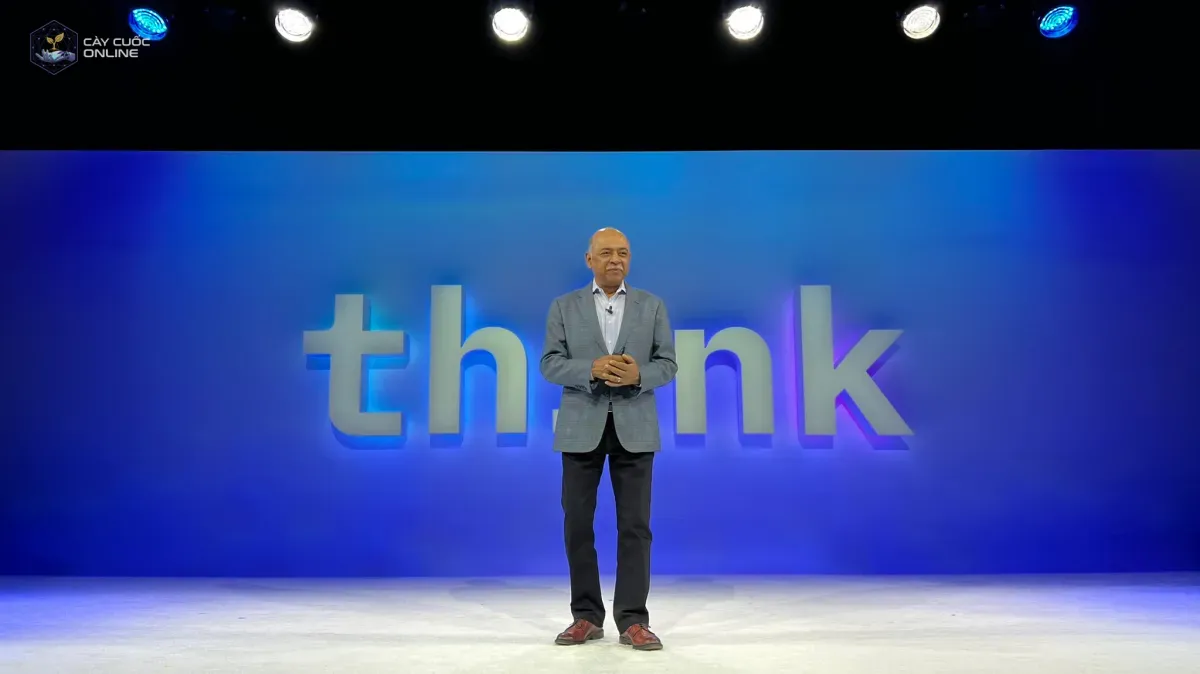
IBM trải qua quý đáng thất vọng với doanh thu mainframe giảm 42%, khiến cổ phiếu lao dốc. CEO Krishna khẳng định AI không phải nguyên nhân, mà do khách hàng chuyển ngân sách vì chi phí tăng cao.
IBM’s Stark Q1 Financial Performance and Market Repercussions
Significant Financial Miss Against Expectations
IBM officially reported its Q1 earnings, revealing a financial performance that significantly underperformed Wall Street’s expectations. Despite generating substantial figures—$17.2 billion in revenue, a robust $9.9 billion in gross profit, indicating impressive nearly 58% gross margins, and $2.2 billion in net earnings for the quarter—the discrepancy between these results and analyst projections caused considerable concern. This gap highlights a critical challenge for a 115-year-old enterprise like IBM: maintaining growth and meeting the demanding forecasts of financial markets, even when profitability metrics remain strong on an absolute basis. The miss suggests that the market’s growth expectations for IBM, particularly in its core segments, were not merely ambitious but fundamentally misaligned with the company’s operational reality during this period, signaling potential underlying structural issues or temporary market shifts impacting revenue generation.
Immediate and Severe Stock Market Impact
The severity of the earnings miss immediately translated into a brutal reaction from the stock market. IBM’s stock plummeted by an unprecedented 25% in a single day, marking its largest single-day decline ever. This dramatic drop stands in stark contrast to the company’s relatively strong stock performance under CEO Arvind Krishna’s six-year leadership, which had previously benefited significantly from the broader AI data center boom that fueled many tech companies. The sudden and sharp correction indicates a profound loss of investor confidence, suggesting that the market perceives the reported issues as more than just a minor setback. It reflects a re-evaluation of IBM’s growth trajectory and future prospects, particularly given the magnitude of the revenue shortfall in key divisions and the downward revision of full-year growth forecasts, which portend a prolonged impact beyond just the immediate quarter.
Unprecedented Investor Communication Strategy
Proactive Warning via “Letter to Investors”
In a highly unusual and unprecedented move, IBM CEO Arvind Krishna and the board took the step of pre-warning investors about the impending dismal earnings. A “letter to investors” was published ahead of the official report, sharing preliminary results and openly admitting that the earnings were “worse than our expectations.” This proactive disclosure aimed to offer a sneak peek into the company’s struggles. This strategic decision, while perhaps intended to manage expectations and demonstrate transparency, is a double-edged sword. On one hand, it could be seen as an honest attempt to prepare the market and avoid a larger shock. On the other, it signals the profound depth of the issues, so severe that the company felt compelled to break traditional reporting protocols, potentially eroding long-term investor trust in the stability and predictability of IBM’s performance.
Transparency vs. Damage Control: A Strategic Gamble
The letter explicitly warned of “abysmal revenue” in IBM’s “all-important ‘infrastructure’ category” and forecasted a hit to profit margins. This level of granular pre-disclosure is rare and represents a significant strategic gamble. While it offers a degree of transparency, it undeniably functions as a form of damage control, attempting to soften the blow of official figures that management knew would be deeply disappointing. The effectiveness of such a strategy is debatable; while it might prevent accusations of withholding critical information, it simultaneously confirms the severity of the operational challenges, potentially reinforcing negative sentiment rather than alleviating it. The market’s 25% stock drop post-official announcement, despite the pre-warning, suggests that even with preparation, the true impact and perceived implications were still substantial enough to trigger a severe investor reaction, underscoring the fragility of market confidence in periods of uncertainty.
Root Causes of the Earnings Miss: The Mainframe Challenge
The Collapse of IBM’s Cash-Cow Mainframe Business
The primary culprit behind IBM’s abysmal quarter was identified as a precipitous 42% decline in its cash-cow mainframe business. This decline is not merely a reduction in hardware sales; it represents a cascading problem for IBM’s broader ecosystem. As CFO Jim Kavanaugh elucidated on the quarterly call, for every $1 of mainframe hardware IBM sells, it typically generates an additional $3 in software revenue. Therefore, a 42% drop in mainframe hardware sales translates into a significantly larger, disproportionate impact on IBM’s high-margin software business, which is intricately tied to the mainframe platform. This interdependency means that the slowdown in mainframe purchases has a multiplicative negative effect on the company’s overall revenue and profitability, undermining a foundational element of its enterprise offerings and revealing a vulnerability in its integrated hardware-software model.
Customer Deferrals and Budget Reallocation Pressures
The immediate cause for the mainframe decline was attributed to “tens” of customers who were slated to purchase new mainframes during the quarter but ultimately opted not to. While “tens” might not sound like a large number, mainframes are not commodity items. These systems cost hundreds of thousands to millions of dollars per unit, and when combined with maintenance contracts and proprietary software, they generate many millions more in recurring revenue over their lifecycle. Therefore, a small number of deferrals from high-value customers can have a colossal impact on quarterly financial results. This deferral pattern points to a broader trend of enterprise clients re-evaluating or reallocating their significant IT budgets in response to new market pressures and opportunities, directly impacting IBM’s traditional revenue streams.
The “AI Paradox”: How AI Both Lifted and Sank IBM
Initial AI-Driven Market Buoyancy for IBM
Ironically, the very phenomenon that had previously buoyed IBM’s stock and leadership under Arvind Krishna—the burgeoning AI data center boom—also played a direct role in its recent downfall. For several years, the surge in demand for AI-specific infrastructure, high-performance computing, and related data center technologies created a rising tide that lifted many boats in the tech sector, including IBM. The perception that IBM was well-positioned in enterprise AI, hybrid cloud, and data analytics contributed to a positive outlook, allowing its stock to perform well relative to its historical trends. This period showcased the market’s enthusiasm for companies perceived to be at the forefront of the AI revolution, demonstrating how crucial the narrative around emerging technologies is for investor sentiment and stock performance.
Unintended Consequence: Budget Shift to AI Hardware
However, the AI boom presented an unintended and detrimental consequence for IBM’s mainframe business. Krishna explained that instead of purchasing new mainframes, clients shifted their budgets to acquire other hardware necessary for AI build-outs. These customers were confronted with “astronomically high cost increases of 15% to 30%” for data center gear and PCs, driven by the intense demand for components like memory that power AI infrastructure. Faced with these significant and unanticipated price hikes in critical AI-related hardware, enterprises prioritized allocating their finite IT budgets to these immediate and costly AI requirements. This strategic reallocation meant deferring less urgent, albeit significant, investments like mainframe upgrades, illustrating a direct competitive pressure on IT spending where AI infrastructure took precedence over traditional enterprise hardware refreshes.
Broader Industry Trends Confirming Cost Pressures
The cost pressures experienced by IBM’s clients are not isolated incidents but reflect a broader industry trend. Other major enterprise hardware manufacturers, such as Dell and HP, have previously issued warnings about rising component costs—particularly for memory—directly attributable to the widespread AI build-out boom. Even consumer tech giants like Apple have acknowledged similar supply chain and cost challenges. This widespread phenomenon validates IBM’s explanation regarding client budget reallocations. It underscores how the intense global demand for specific components crucial for AI development is creating inflationary pressures across the hardware supply chain, forcing companies to increase prices and compelling enterprise customers to make difficult budgetary trade-offs. This dynamic creates a complex environment for companies like IBM, where even robust, established product lines can face headwinds due to market forces driven by emerging technologies.
Management’s Reassurance and Future Outlook
Insistence on a “Temporary Blip” and Future Mainframe Sales
Despite the severity of the quarter’s results and the historical stock decline, both CEO Arvind Krishna and CFO Jim Kavanaugh spent the investor call insisting that the mainframe downturn was merely a “temporary blip.” They expressed confidence that the customers who deferred their purchases would still eventually buy their new mainframes, implying that the demand is merely delayed, not lost. This narrative aims to reassure investors that the fundamental demand for IBM’s core offerings remains strong and that the current challenges are transient, driven by short-term market dynamics rather than a structural decline in the mainframe’s relevance. The management’s optimistic outlook hinges on the belief that once the immediate pressures of AI hardware costs subside or budgets are replenished, clients will revert to their planned mainframe refresh cycles, demonstrating the continuing critical role mainframes play in supporting mission-critical enterprise workloads.
Contrasting Messages: “Temporary Blip” vs. Full-Year Forecast Downgrade
However, the management’s insistence on a “temporary blip” is somewhat contradicted by another significant announcement: IBM lowered its full-year growth forecasts. This revision indicates that the impact of the horrible quarter is expected to extend beyond just a single period, influencing the company’s performance for the remainder of the year. While a “temporary blip” suggests a quick rebound, a lowered full-year forecast implies a more prolonged and significant headwind. This discrepancy creates a challenging narrative for investors to reconcile, raising questions about the true extent and duration of the operational challenges. It suggests that while management might be optimistic about eventual customer purchases, they are also realistically acknowledging that the path to recovery and meeting growth targets will be more arduous and protracted than initially anticipated, highlighting the tension between market reassurance and pragmatic financial forecasting.
SEO Implications and Strategic Keyword Opportunities
Targeting Investor and Industry Analyst Intent
From an SEO perspective, the news surrounding IBM’s earnings provides a wealth of opportunities to capture search traffic from a highly specific and valuable audience: investors, financial analysts, tech journalists, and competitors. These users are typically looking for in-depth analysis, context, and forward-looking implications rather than just headline news. Their search intent will revolve around understanding the “why” behind the numbers, the strategic implications, and the future outlook for IBM and the broader enterprise IT market. Content should therefore be structured to answer complex questions comprehensively, providing expert commentary and data-driven insights. By focusing on detailed breakdowns, historical comparisons, and future projections, content creators can position themselves as authoritative sources for critical financial and technological intelligence.
Leveraging High-Value Key Phrases and Long-Tail Keywords
To maximize organic visibility, a strategic keyword approach is essential. Short-tail, high-volume keywords like “IBM earnings miss,” “IBM stock decline,” and “IBM mainframe revenue” will attract broad interest. However, significant value lies in long-tail keywords that address specific aspects of the news and user intent. Examples include “why did IBM stock drop 25%,” “impact of AI boom on enterprise IT spending,” “IBM Q1 results analysis,” “Arvind Krishna letter to investors significance,” “mainframe business decline reasons,” and “future of IBM mainframe technology.” Targeting these phrases with dedicated, high-quality content that directly answers user queries will attract highly qualified traffic. Incorporating entity-based SEO, where specific terms like “IBM,” “Arvind Krishna,” “mainframe,” and “AI data center boom” are consistently used and interlinked, will also reinforce topical authority.
Content Strategy for Authority and Organic Growth
An effective content strategy should leverage this news to create various content types that cater to different stages of the research journey. This includes analytical blog posts dissecting the earnings report, whitepapers on the implications of AI on enterprise IT budgets, competitive analyses comparing IBM’s performance with rivals like Dell and HP in the enterprise hardware space, and expert opinion pieces on the future trajectory of traditional IT infrastructure versus emerging AI demands. Content should be data-rich, citing figures from the report and external market research, and offer unique insights into the strategic moves of IBM’s management. Regularly updating content with follow-up analyses on subsequent quarters or market developments will maintain relevance and build long-term topical authority. Additionally, optimizing for schema markup (e.g., Article, NewsArticle) and ensuring mobile-friendliness will enhance search engine visibility and user experience.