
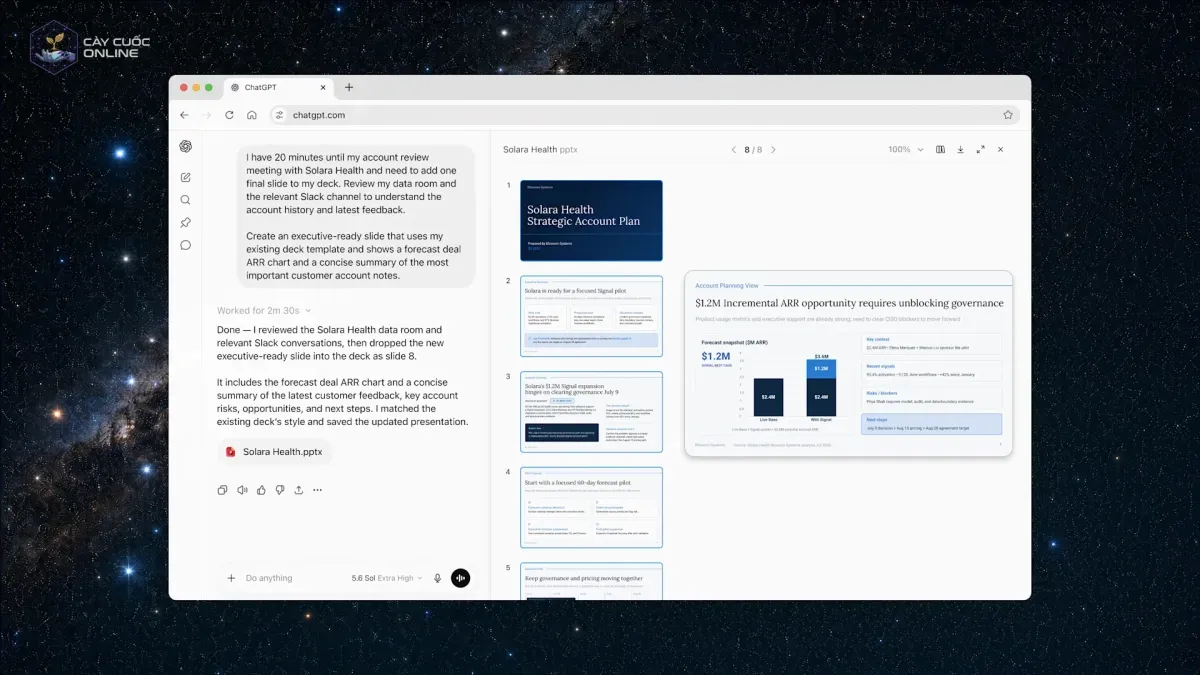
OpenAI đóng trình duyệt Atlas, chuyển tính năng duyệt AI vào ChatGPT desktop và tiện ích Chrome. ChatGPT trở thành trung tâm làm việc AI liên tục, tối ưu trải nghiệm duyệt web.
Strategic Reorientation of OpenAI’s Web Browsing Vision
From Dedicated Browser to Integrated Feature Set
OpenAI’s decision to sunset Atlas, its AI-powered browser, signals a profound strategic shift from viewing the browser as a standalone product to repositioning its core AI capabilities as integrated features within existing user workflows. The insight, “the browser is a feature, not the destination,” is crucial here. It reflects a realization that users are deeply entrenched in their current browsing habits and platforms (like Chrome), making it challenging to introduce an entirely new browsing experience. Instead, OpenAI is opting for a more pragmatic approach: embedding AI directly into where people already spend their time online.
Lessons Learned from Atlas’s Sunset
The shutdown of Atlas comes a few months after an internal directive from Fidji Simo to cut back on “side quests.” This suggests that Atlas, despite its innovative premise with ChatGPT at its core, was identified as a project that diverted resources from OpenAI’s primary objectives. Similar to the AI video-generation tool Sora being shut down, Atlas likely faced challenges in achieving rapid user adoption or demonstrating a clear path to market dominance against established browser giants. This internal refocusing underscores a commitment to streamlining product development and concentrating efforts on core strengths.The Rationale Behind the Shift
The strategic rationale behind abandoning a dedicated browser for an integrated approach is multi-faceted. Firstly, it leverages existing user habits, reducing the friction associated with adopting a new browser. Secondly, it allows OpenAI to focus its engineering efforts on developing agentic AI capabilities rather than maintaining a full-fledged browser infrastructure. By distributing these features, OpenAI aims to achieve broader reach and deeper integration into the daily digital lives of its users, turning ChatGPT into a more pervasive and indispensable tool across various touchpoints.
Distributed Agentic Browsing: The New Frontier
The ChatGPT Chrome Extension: A Gateway to Contextual AI
The forthcoming ChatGPT extension for Google Chrome represents a pivotal move to embed OpenAI’s AI directly into the browsing experience. This extension grants ChatGPT access to the real-time context of the page a user is viewing, enabling a range of powerful functions. Users will be able to ask specific questions about webpage content, generate summaries of lengthy articles, or even initiate complex multi-step tasks directly from the browser interface. This positions the extension as a direct and potent competitor to existing solutions like Google’s Gemini Side Panel, vying for user attention and utility within the dominant browser ecosystem.
Enhanced ChatGPT Desktop App: A Robust Workspace
Beyond the browser extension, OpenAI is significantly bolstering its ChatGPT desktop application. The enhanced app will feature a more robust, integrated browser that allows users to perform typical browsing actions—such as navigating websites, logging into accounts, downloading files, and interacting with web pages—all without needing to leave the ChatGPT environment. A key innovation here is the separate cloud browser running remotely on OpenAI’s servers. This remote browser acts as a sandbox where the app’s AI agents can autonomously complete tasks on a user’s behalf, effectively transforming the desktop app into a comprehensive, AI-driven workspace.
Unifying the User Experience: A Continuous AI Workspace
Collectively, these updates converge to transform ChatGPT into a seamless, continuous workspace that intelligently spans across disparate digital environments. The synergy between the Chrome extension, the desktop app with its integrated browser, and the underlying AI agent capabilities creates a powerful ecosystem. Users can transition effortlessly between browsing the web (via Chrome or the desktop app) and leveraging ChatGPT’s intelligence to analyze, summarize, or act upon information. This unified approach aims to make AI an omnipresent, assistive layer in all web-related tasks, streamlining workflows and enhancing productivity across the board.
Competitive Landscape and Industry Trends
The Evolving “Browser War” and AI Integration
The past year has witnessed an intense “browser war,” not merely for market share, but for establishing the primary interface through which users interact with the internet, now heavily infused with AI. Companies like Perplexity with Comet and The Browser Company with Dia have launched new browsers built from the ground up with AI at their core. Simultaneously, established players like Google and Microsoft have rapidly integrated advanced AI-powered features into their respective Chrome and Edge browsers. OpenAI’s move, while seemingly retreating from the dedicated browser fight, is a strategic re-entry, focusing on embedding AI more deeply into the platforms users already favor.
Direct Competition with Google’s AI Offerings
OpenAI’s Chrome extension, with its ability to access page context, summarize content, and answer questions, directly challenges Google’s Gemini Side Panel. This sets up a clear head-to-head competition within the crucial Chrome ecosystem. Both companies are vying to be the go-to AI assistant for web browsing, impacting how users discover, consume, and interact with online content. This direct confrontation highlights the strategic importance of “contextual AI” within the browser, pushing both tech giants to innovate rapidly in this domain to capture and retain user engagement.
OpenAI’s Strategic Positioning Amidst Competitors
By shifting away from a full-fledged browser, OpenAI is adopting a differentiated strategic position. Instead of attempting to displace Chrome, it aims to augment it, along with its own desktop app, making ChatGPT an indispensable layer *within* the existing digital infrastructure. This approach sidesteps the immense challenge and cost of building and marketing a new browser while simultaneously leveraging its core strength: powerful conversational AI. This strategy allows OpenAI to focus its resources on perfecting its AI agent capabilities and integrating them seamlessly into ubiquitous touchpoints, rather than competing on browser features and ecosystem lock-in.
SEO and Content Marketing Implications
Impact on Content Discovery and Summarization
The rise of AI agents capable of summarizing web pages and answering questions directly from the browser has profound implications for content discovery. Users may increasingly rely on AI summaries for quick information retrieval, potentially reducing the need to click through to the original article for every query. This shift could impact traditional metrics like page views and time on page, especially for informational content. SEOs must consider how their content is optimized not only for search engines but also for accurate and concise AI summarization, ensuring that key takeaways are easily extractable by these new tools.
The Rise of Contextual Search and Agentic Interactions
With AI extensions allowing users to ask questions *about* a specific web page or initiate longer tasks from within the browser, the nature of “search” is evolving beyond simple keyword queries on a search engine results page. Users are moving towards more contextual, agentic interactions where AI assists directly on the page. This means that content needs to be structured semantically, with clear headings, definitive answers, and well-defined entities to facilitate precise AI understanding and response. The focus shifts from merely ranking for keywords to providing comprehensive and easily consumable answers within the content itself.
Optimizing for AI Agents: A New SEO Frontier
The advent of deeply integrated AI agents presents a new frontier for SEO professionals. Optimization will increasingly involve ensuring content is not just crawlable and indexable by traditional search engines, but also highly intelligible and actionable for AI agents. This includes leveraging structured data more extensively, adopting clear and concise language, creating robust FAQs, and ensuring that content provides definitive answers to potential user queries. The goal will be to make content “AI-friendly,” allowing these agents to accurately interpret, summarize, and utilize the information, thereby enhancing visibility and utility in an AI-dominated browsing landscape. Content quality, authority, and semantic richness will become even more paramount.