
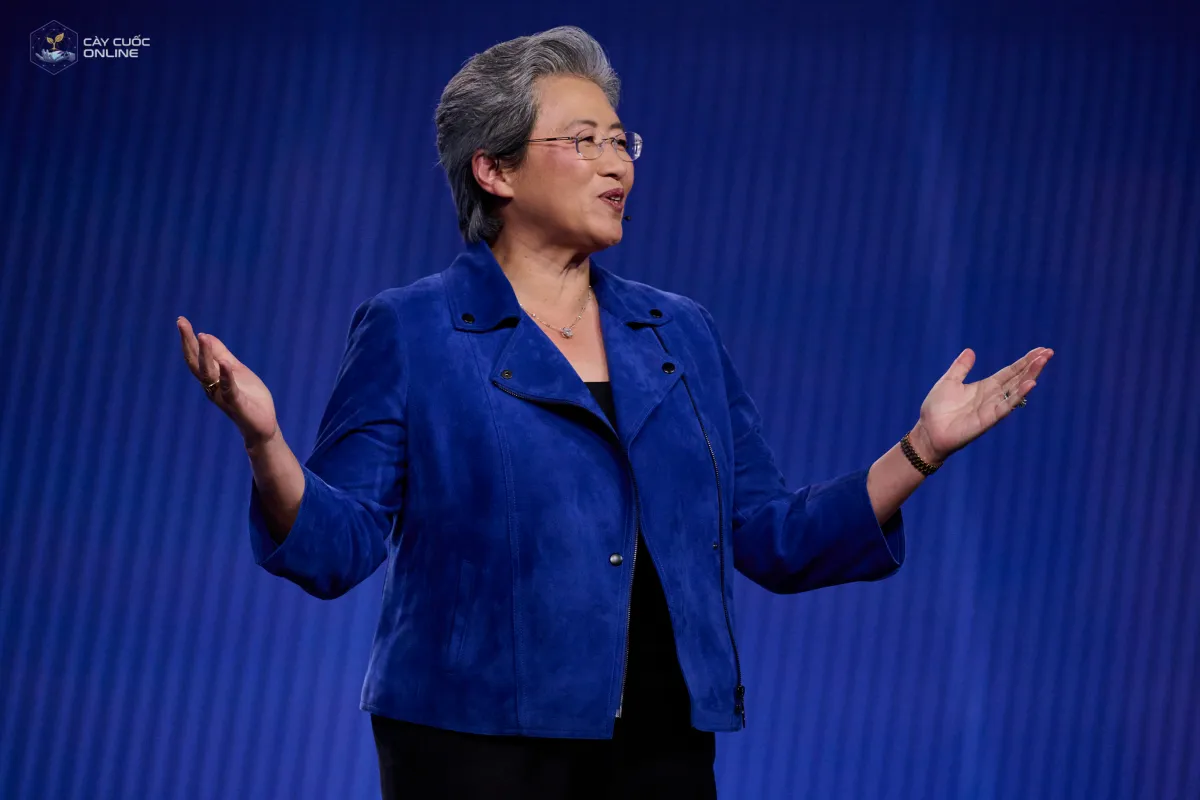
AMD trình làng Helios, hệ thống AI rack mạnh mẽ nhắm thẳng vào Nvidia. Thiết kế cho các phòng thí nghiệm AI lớn, Helios đã có những khách hàng khủng như Microsoft.
AMD’s Ambitious Foray into High-Performance AI Infrastructure
AMD is making a calculated and aggressive move into the burgeoning market of high-performance AI infrastructure, directly challenging the entrenched dominance of competitor Nvidia. This strategic pivot, highlighted by the introduction of its rack-scale system, Helios, signifies AMD’s intent to capture a significant share of the computing needs of the world’s largest AI labs. The timing is crucial, coinciding with an unprecedented boom in AI development and deployment, which demands ever-increasing computational power. AMD’s approach is not merely about launching a new product but establishing a comprehensive ecosystem designed to scale with the exponential growth of AI.
Direct Challenge to Nvidia’s AI Dominance
Historically, Nvidia has held a near-monopoly in the specialized segment of rack-scale AI systems, particularly with its Vera Rubin and Grace Blackwell offerings. AMD’s new Helios system is explicitly positioned to disrupt this landscape, aiming for direct competitive parity and, in some reported metrics, superiority. This isn’t just a product launch; it’s a declaration of war in the high-stakes arena of AI compute infrastructure. By targeting the “rack-scale system” market, AMD is focusing on the foundational hardware that powers the most advanced AI research and commercial applications, signaling a long-term commitment to becoming a primary supplier for AI’s foundational needs. The strategic importance of directly competing in this high-margin, high-demand sector cannot be overstated, as it positions AMD as a critical enabler for the next generation of AI development.
The Significance of Rack-Scale AI Systems
Rack-scale AI systems represent the pinnacle of computational engineering, combining numerous processors—specifically GPUs—into a single, immensely powerful unit. These systems are the backbone of modern data centers, where they are tasked with the most demanding workloads: training complex AI models, running inference for large-scale applications, and handling other compute-intensive tasks crucial for scientific research and commercial innovation. The sheer scale implied by AMD’s commitment to “gigawatt-scale” deployment for leading AI companies underscores the gargantuan energy and computational requirements of frontier AI models. This level of infrastructure is vital for organizations pushing the boundaries of AI, where every increment of performance and efficiency directly translates into faster development cycles and more sophisticated model capabilities. AMD’s entry signifies a maturation of the AI hardware market and an increased focus on integrated, scalable solutions.
Helios: AMD’s Flagship AI Rack System Unveiled
The introduction of Helios marks a significant milestone for AMD, representing their most ambitious push into the AI hardware sector. Positioned as the company’s flagship AI rack system, Helios is designed from the ground up to address the extreme computational demands of the world’s leading AI laboratories. Its unveiling, first in 2025 and then showcased at CES 2026, followed by a planned shipment later this year, indicates a well-orchestrated product roadmap aimed at immediate market penetration and disruption. This rapid progression from announcement to deployment underscores AMD’s agility and commitment to capitalizing on the current AI boom.
Performance Metrics and Market Positioning
Dr. Lisa Su’s bold claim that Helios is the tech industry’s “highest-performance AI rack” immediately positions it as a formidable contender. The reported performance metrics, specifically noting Helios’s ability to “beat out Vera Rubin by a number of metrics,” as reported by The Register, provide concrete evidence of AMD’s competitive edge. This performance superiority is crucial for attracting top-tier AI labs, as even marginal improvements in speed and efficiency can drastically reduce training times and operational costs for massive models. Helios is explicitly “built to train and run the most demanding frontier models in the world at massive scale,” indicating its suitability for projects requiring unparalleled computational power and scalability. Such metrics are not just technical specifications; they are powerful selling points in a market driven by raw compute capability.
Addressing the “Compute-Hungry Dragon” of AI
The AI industry, aptly described as a “compute-hungry dragon,” necessitates hardware solutions that can feed its insatiable demand for processing power. Helios, along with AMD’s newest chips, directly addresses this need. The exponential growth in model complexity and data volume requires systems capable of handling unprecedented workloads. Dr. Su’s detailed explanation of “agentic AI” provides critical insight into this escalating demand: when an agent performs a task, it involves “dozens of steps,” requiring extensive “reasoning,” “tool calling,” “data access,” and iterative processing. Each of these components consumes significant GPU cycles, illustrating why “lots of GPUs” are indispensable. Helios is designed precisely for these multi-faceted, iterative computational patterns, ensuring that AMD is providing the foundational infrastructure for the next generation of intelligent systems that operate with a higher degree of autonomy and complexity.
Strategic Customer Wins and Industry Partnerships
AMD’s success with Helios is not merely a testament to its technical prowess but also to its robust strategic partnerships and impressive customer acquisitions. The announcement of a growing list of high-profile customers before the system even ships later this year is a significant vote of confidence from the market’s most influential players. These early adoptions provide critical validation for Helios’s capabilities and solidify AMD’s position as a credible and formidable challenger in the AI hardware space.
Marquee Customer Adoption
The roster of customers planning to deploy Helios reads like a who’s who of the AI and cloud computing industries: OpenAI, Meta, Oracle, Anthropic, and Microsoft. Each of these entities represents a critical segment of the AI ecosystem, from foundational model development (OpenAI, Anthropic) to large-scale cloud infrastructure (Microsoft Azure, Oracle) and social media/metaverse development (Meta). Microsoft CEO Satya Nadella’s public statement about expanding Azure infrastructure with Helios is particularly impactful, signaling a major cloud provider’s commitment to AMD’s AI platform. This level of adoption by industry leaders not only generates substantial revenue but also creates a powerful network effect, encouraging other enterprises to consider Helios for their AI needs. It demonstrates that AMD is not just competing on specs but also building deep, strategic relationships.
Anthropic Partnership and Gigawatt-Scale Deployment
The strategic partnership with Anthropic, announced specifically for the deployment of “up to two gigawatts of GPUs” via the new rack system, is a monumental endorsement. To put “gigawatts of GPUs” into perspective, this represents an enormous, industrial-scale investment in computational power. It signifies Anthropic’s long-term commitment to leveraging AMD’s technology for their cutting-edge AI research and development, likely including the training of future foundational models. Such a massive deployment of GPUs underlines the immense computational resources required for advanced AI and validates Helios’s capability to operate at an unprecedented scale. This partnership is not just a customer win; it’s a strategic alliance that could shape the future trajectory of AI development, potentially making AMD an indispensable partner for top-tier AI research labs globally.
Expanding AMD’s AI Hardware Ecosystem
While Helios takes center stage, AMD’s strategy extends beyond GPU-centric rack systems to a broader hardware ecosystem. The introduction of new CPU offerings demonstrates a holistic approach to meeting the diverse and complex demands of modern data centers, ensuring that AMD can provide comprehensive solutions for AI workloads.
The Venice-X CPU for Data Centers
Alongside Helios, AMD introduced its Venice-X CPU, specifically designed for data centers and high-computing workloads. While GPUs are paramount for AI model training, CPUs remain critical for a myriad of tasks, including data pre-processing, orchestrating complex workflows, managing system resources, and handling general-purpose computing tasks that complement GPU acceleration. The Venice-X CPU’s focus on high-computing workloads suggests it will integrate seamlessly with GPU-accelerated environments like Helios, offering a balanced and powerful compute platform. Its expected launch in 2027 indicates AMD’s long-term product roadmap and a continuous commitment to developing a robust portfolio of hardware tailored for the evolving needs of AI and data centers. This ensures that AMD can offer end-to-end solutions, from raw processing power to intelligent workload management.
The Future Trajectory of AI and Chip Demand
Dr. Lisa Su’s remarks extended beyond immediate product announcements to offer a visionary outlook on the future of the chip industry, specifically emphasizing the transformative impact of AI on compute demand. This forward-looking perspective underpins AMD’s current strategic investments and highlights the long-term market opportunities they are positioning themselves to capture.
Dr. Lisa Su’s Vision for AI Chip Market Growth
Dr. Su’s prediction that “by the year 2030, chips that power AI will become a massive part of the overall computing market” is a bold statement that reflects the industry’s consensus on AI’s pervasive future. This isn’t merely incremental growth; it’s a “step change in compute demand” that redefines the entire computing landscape. The driver for this dramatic shift is identified as the rise of “agentic AI.” Her detailed explanation provides crucial context: when an agent is asked to perform a task, it doesn’t execute a simple, singular command. Instead, it involves “dozens of steps,” requires complex “reasoning,” needs to “call tools,” “access data,” and iterate “over and over until it solves the problem.” This iterative, multi-faceted, and computationally intensive nature of agentic AI is precisely why the demand for GPUs and high-performance computing systems like Helios will skyrocket, making AI chips not just a segment, but a foundational component of the entire computing market. This future vision justifies AMD’s aggressive investment and strategic positioning today.